


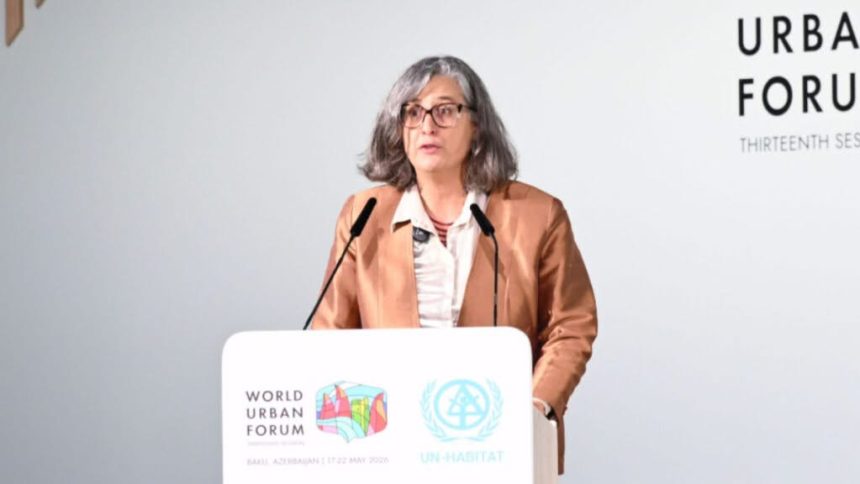
The 13th Session of the UN-Habitat World Urban Forum (WUF13) opened on Monday in Baku, Azerbaijan, with global leaders, ministers, urban planners, and development experts calling for urgent and coordinated action on affordable housing, climate resilience, and sustainable urban development.
The six-day conference, organised by UN-Habitat in partnership with the Government of Azerbaijan, is being held under the theme “Housing the World: Safe and Resilient Cities and Communities.” It brings together policymakers and technical experts to confront rising global housing shortages, climate-driven disasters, and rapid urban expansion.
The forum is taking place at a time when cities worldwide are under increasing pressure from population growth, infrastructure deficits, inflationary construction costs, and worsening environmental risks. Developing countries, in particular, are facing widening gaps between urban growth and available housing and services.
Nigeria is actively participating in the global summit, with urban development advocates, environmental experts, and policy stakeholders joining discussions expected to influence future housing and urban resilience frameworks.
Among Nigerian participants are climate and sustainability advocate Olumide Idowu, environmental governance expert and urban development researcher Arome Salifu, housing rights campaigner Mariam Lawal, and environmental governance expert Tunde Oladipo.
Idowu stressed the need for African countries to move beyond policy conversations and focus on real investment in housing systems that can withstand climate and population pressures.
“Nigeria’s urban population is growing rapidly, but infrastructure and housing development are not keeping pace. Forums like this are important because they create opportunities for countries to share practical solutions around climate resilience, housing finance, and urban sustainability,” he said.
Salifu warned that weak planning systems are worsening Nigeria’s housing deficit, as cities continue to expand faster than infrastructure delivery.
“Our cities are expanding faster than planning systems can manage. Informal settlements continue to grow because affordable housing remains inaccessible to millions of Nigerians,” he said.
Lawal highlighted the increasing impact of climate change on urban settlements, especially in low-income and flood-prone areas.
“Flooding, poor drainage, and weak infrastructure continue to affect many urban communities in Nigeria. Housing should no longer be treated as a standalone issue because climate resilience, social protection, and urban planning are all connected,” she said.
Oladipo called for stronger collaboration between governments, private investors, and development institutions to close Africa’s urban infrastructure financing gap.
“Many African cities are dealing with population growth without adequate investment in transportation, sanitation, housing, and disaster preparedness. The financing gap remains a major challenge,” he noted.
Opening the ministerial session, Executive Director of UN-Habitat, Anacláudia Rossbach, thanked Azerbaijan for hosting the forum and described 2026 as a defining year for global urban policy direction.
She said the forum is not only about assessing progress but also about shaping future global urban development priorities.
National Coordinator for WUF13, Anar Guliyev, announced the introduction of a new Baku Urban Award, which will recognise innovation in urban planning at future editions of the forum.
“Housing is not merely a social issue, but also a climate, economic, and development issue, as well as a matter of human dignity,” Guliyev said.
UN-Habitat noted that WUF13 will deepen global discussions around the implementation of the New Urban Agenda, adopted in 2016 to guide sustainable urbanisation.
Urban experts at the forum warned that Africa’s rapid urban population growth is not being matched by adequate investment in housing, transport, drainage systems, and social infrastructure.
Nigeria, for example, currently faces an estimated housing deficit of over 28 million units, while major cities such as Lagos, Abuja, Kano, and Port Harcourt continue to struggle with congestion, inadequate drainage, and overstretched public services.
Recent flooding incidents across several Nigerian states have further exposed the vulnerability of urban communities to climate-related disasters.
Stakeholders at the forum believe outcomes from WUF13 could influence future global housing financing models, urban resilience strategies, and international partnerships aimed at improving living conditions in rapidly urbanising regions.
The forum continues until May 22, with discussions focused on affordable housing, climate adaptation, urban mobility, infrastructure financing, and sustainable city planning.
